Blog
Things I've figured out, half-figured out, and written up before I could talk myself out of it.
Neural Networks, Transformers, and How LLMs Learn
The machinery the deep dive skipped: how a neural network and the Transformer work, what loss really means, and how reinforcement learning trains a model.
A Deep Dive into How LLMs Are Built
How a model like ChatGPT is built stage by stage — pretraining, fine-tuning, reinforcement learning — and why it hallucinates and needs tokens to think.
Stop Re-Explaining Yourself to Your AI Coding Tools
Make Claude, Codex, and Gemini efficient: externalize knowledge into files, turn repetition into commands, skills, and hooks, and stop starting from scratch.
Intro to Large Language Models
A plain-English tour of how LLMs work: what they physically are, how they're trained, the OS-like ecosystem around them, and their security issues.
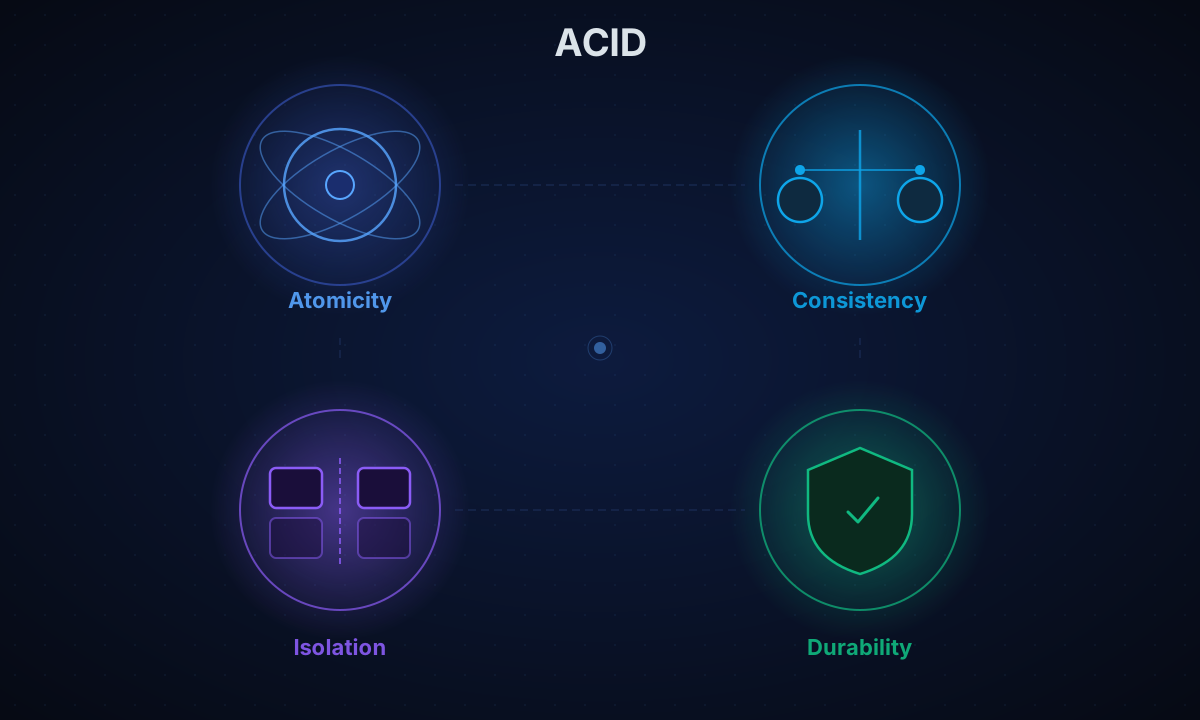
Postgres Concurrency Internals: Connections, Locks, and MVCC
A practical guide to how Postgres handles many concurrent clients — process-per-connection, pooling, lock manager, MVCC tuples, deadlocks, and pg_locks.
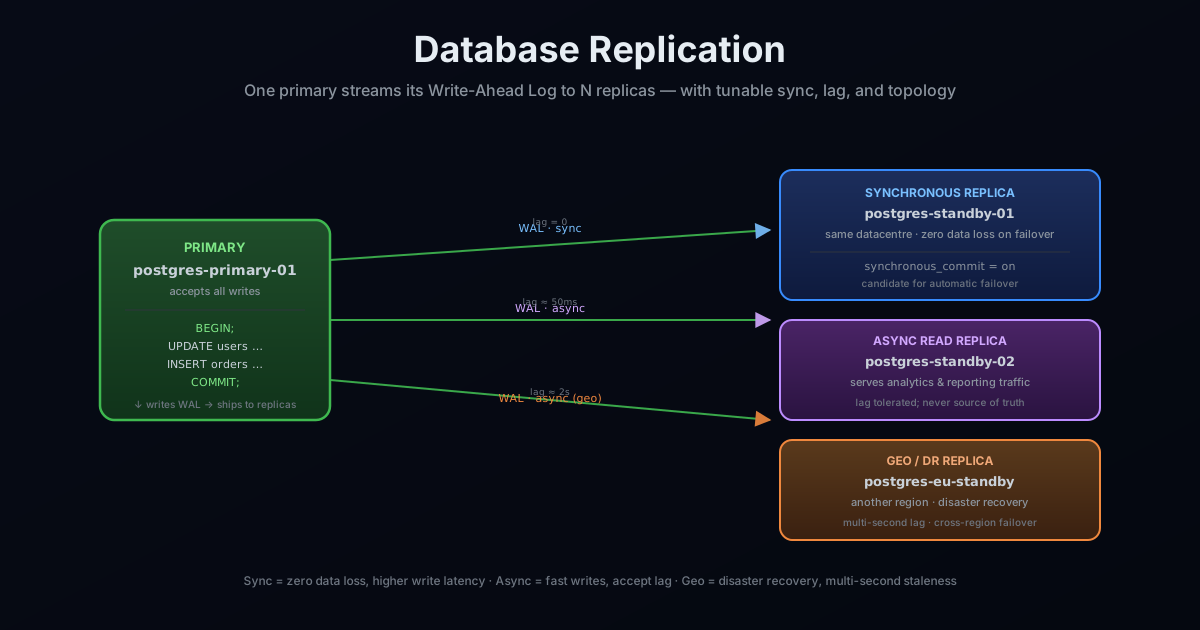
Database Replication: Strategies, Topologies, and What to Use When
A practical guide to PostgreSQL replication — physical vs logical, sync vs async, single-leader / multi-leader / leaderless, and replica-read rules.
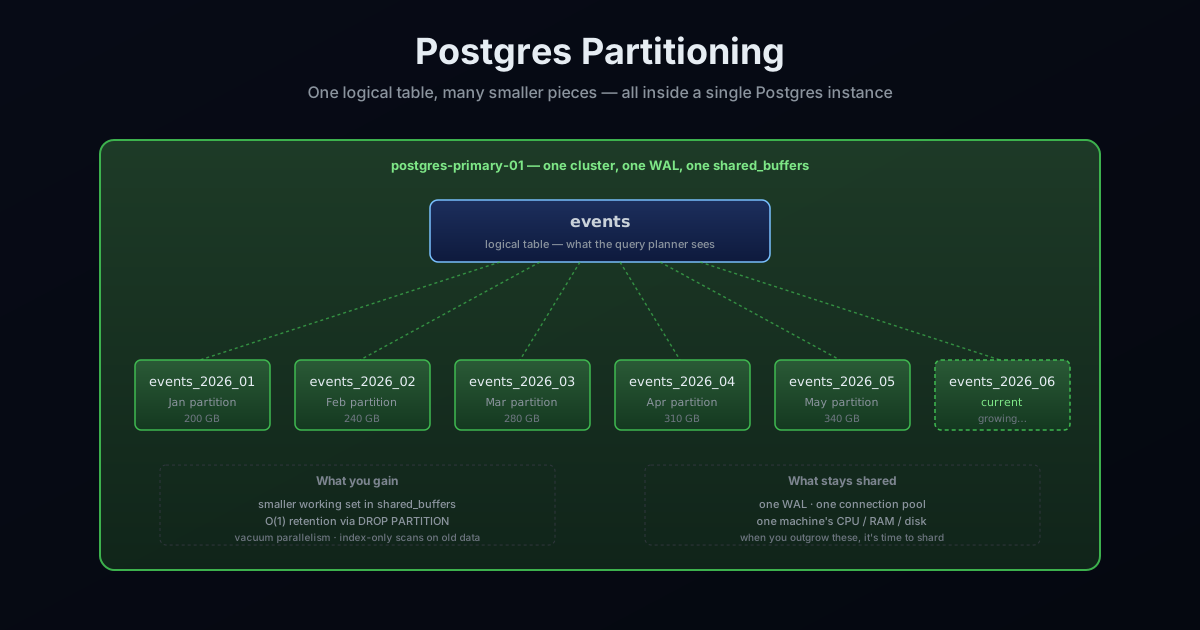
Postgres Partitioning: Strategies, Real Advantages, and Pitfalls
A practical guide to PostgreSQL partitioning — RANGE, LIST, HASH, pruning, local indexes, real advantages, and the pitfalls that bite in production.
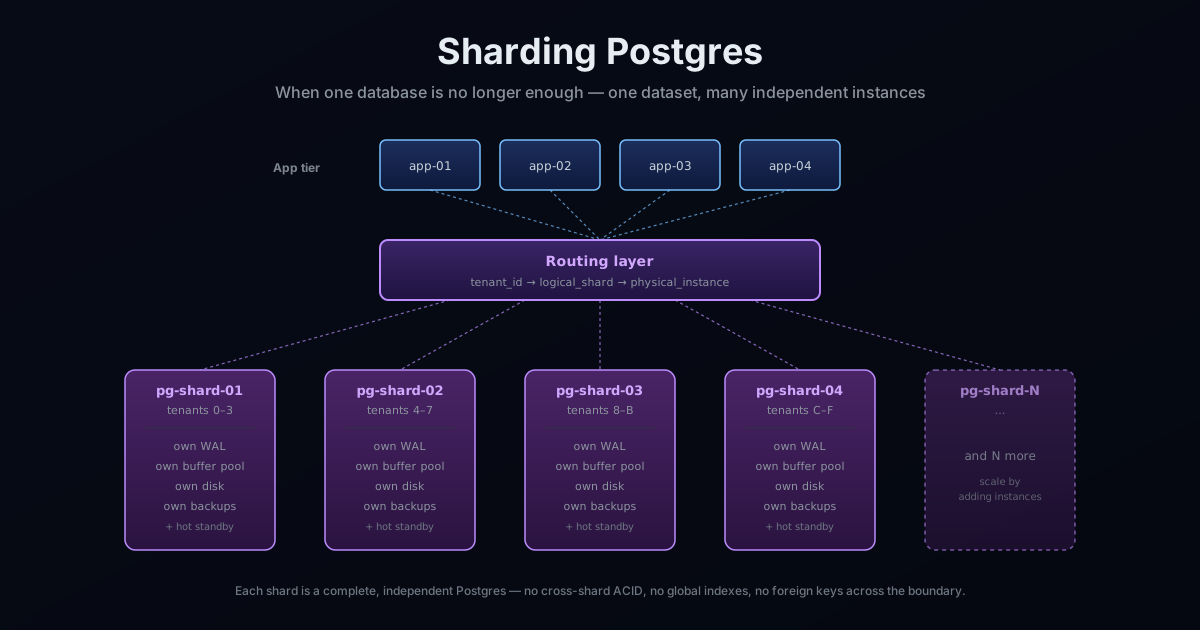
Sharding Postgres: When One Database Stops Being Enough
Sharding PostgreSQL at scale — shard keys, routing, distributed transactions, online rebalancing, and the 15 complexities every team eventually hits.
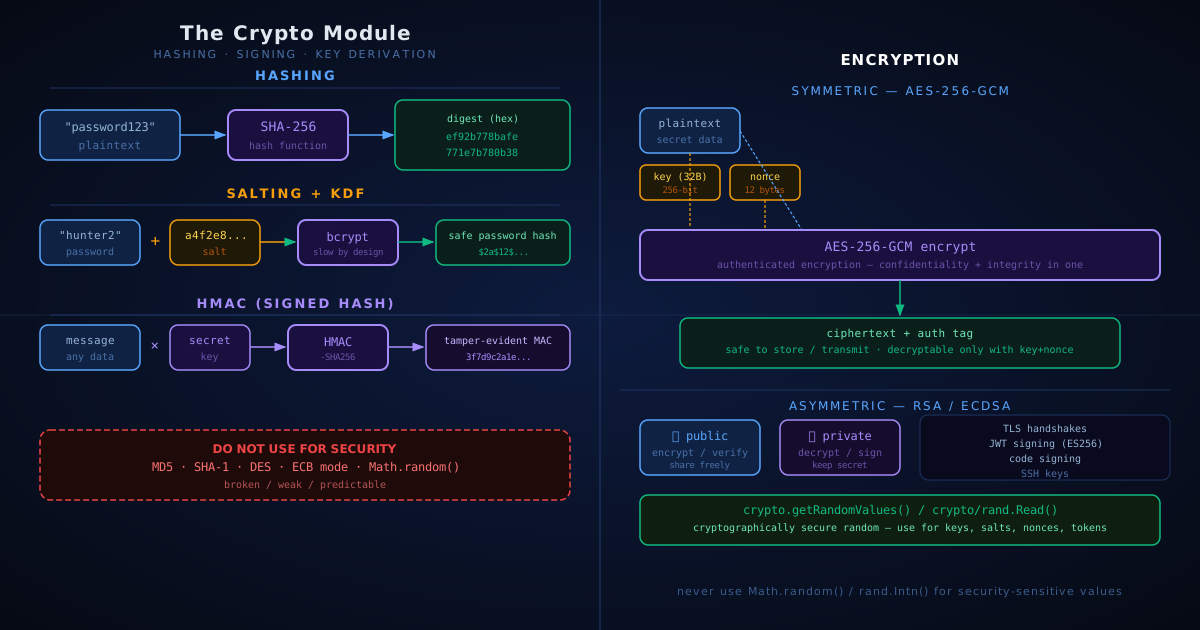
The Crypto Module: Hashing, Encryption, and What to Use When
A practical guide to cryptography primitives available in every language — hashing, salting, HMAC, AES encryption, and secure random. Know what to use when.
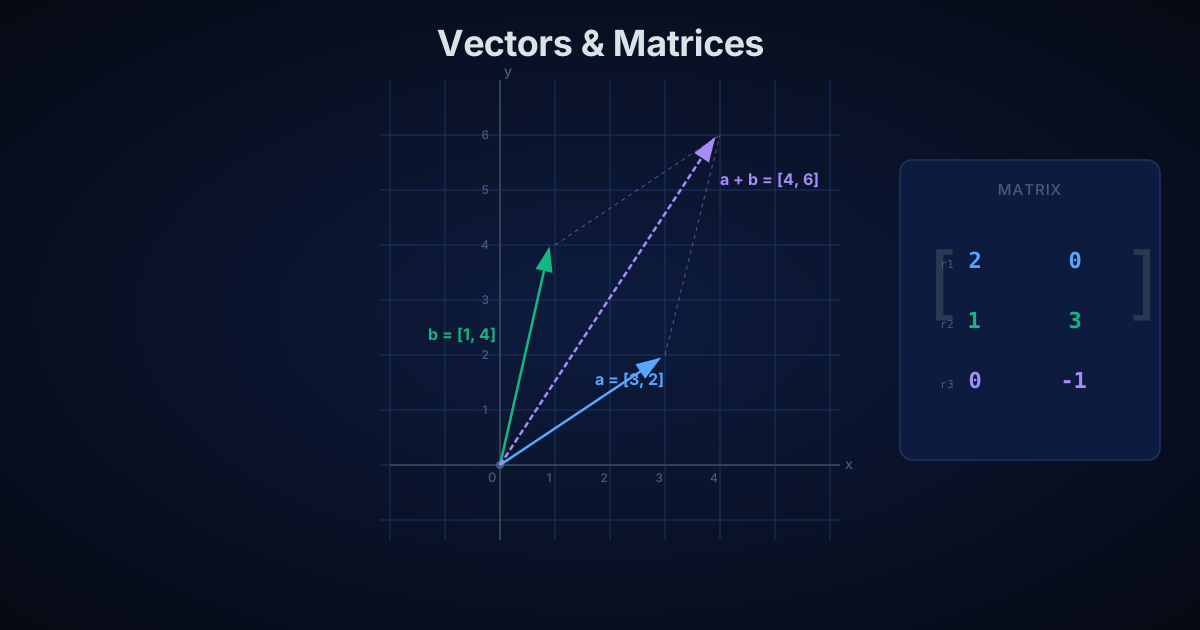
Vectors and Matrices: The Language Neural Networks Speak
A ground-up introduction to vectors, matrices, dot products, and matrix multiplication — the operations every neural network is built from.
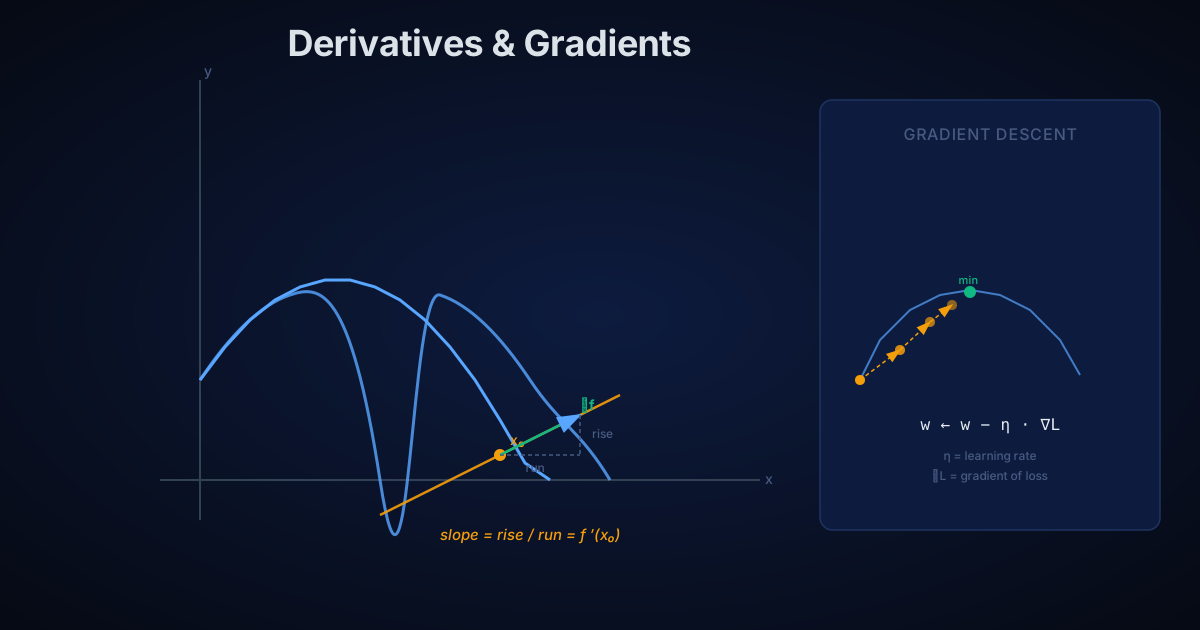
Derivatives and Gradients: Teaching Machines to Improve
Derivatives, the chain rule, partial derivatives, the gradient, and gradient descent — the calculus that drives every step of neural network learning.
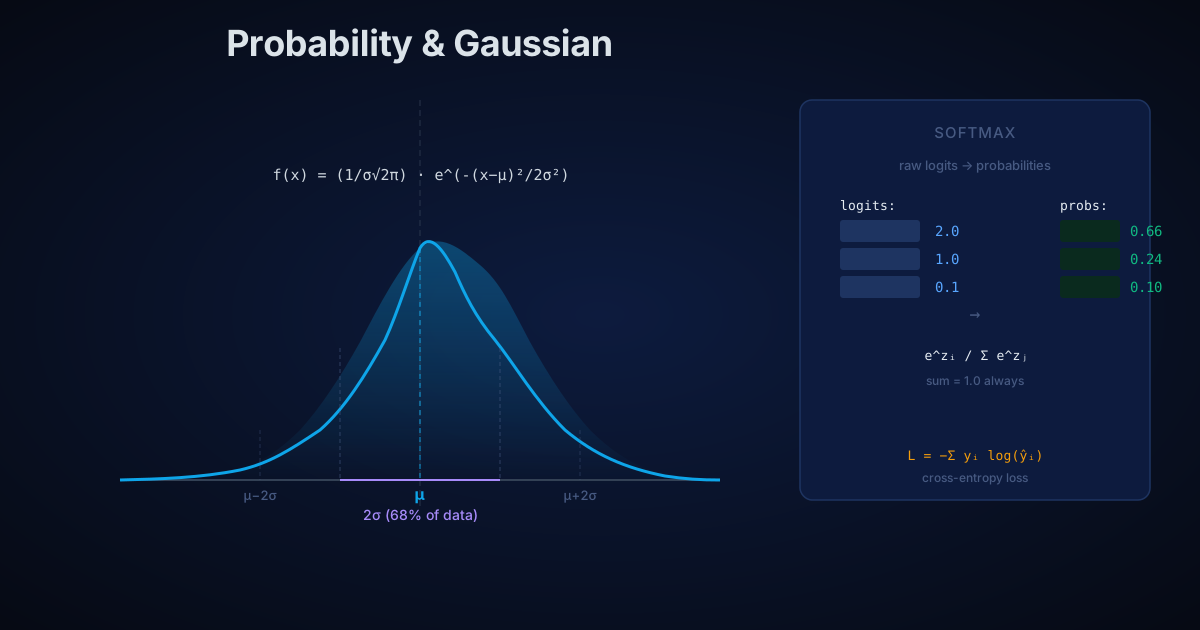
Probability and the Gaussian: How Neural Networks Express Uncertainty
Probability distributions, the Gaussian, softmax, and cross-entropy loss — the tools neural networks use to express uncertainty and produce predictions.
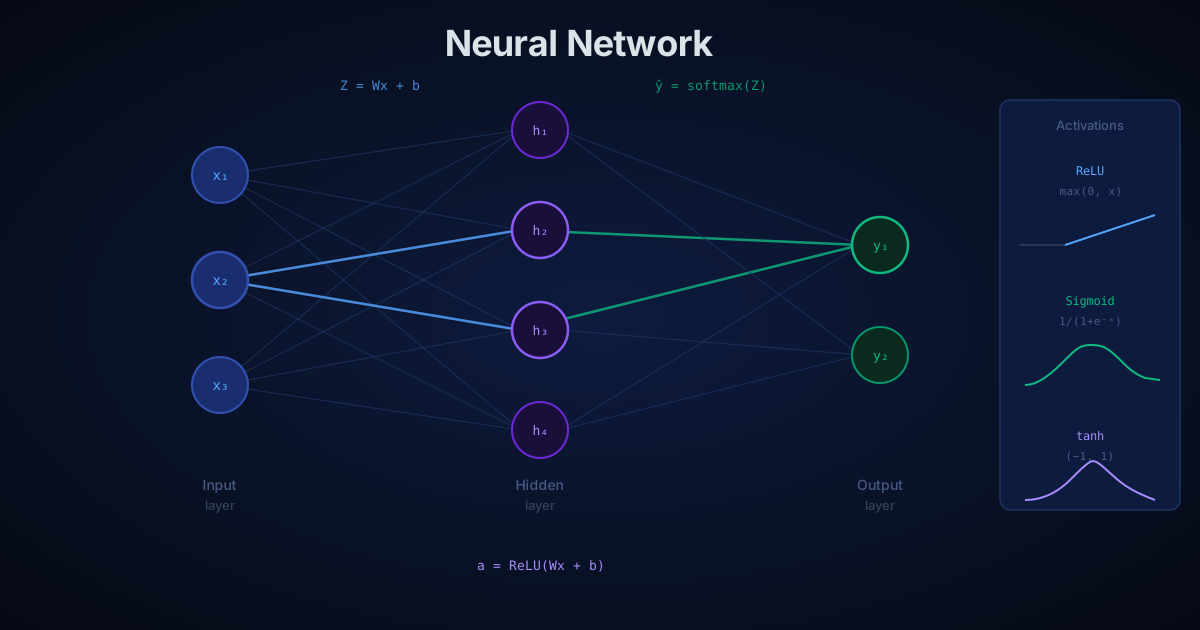
A Neural Network from Scratch: Perceptrons, Layers, and Forward Pass
Build a neural network layer by layer — the perceptron, activation functions (ReLU, sigmoid, tanh), and a complete worked forward pass.
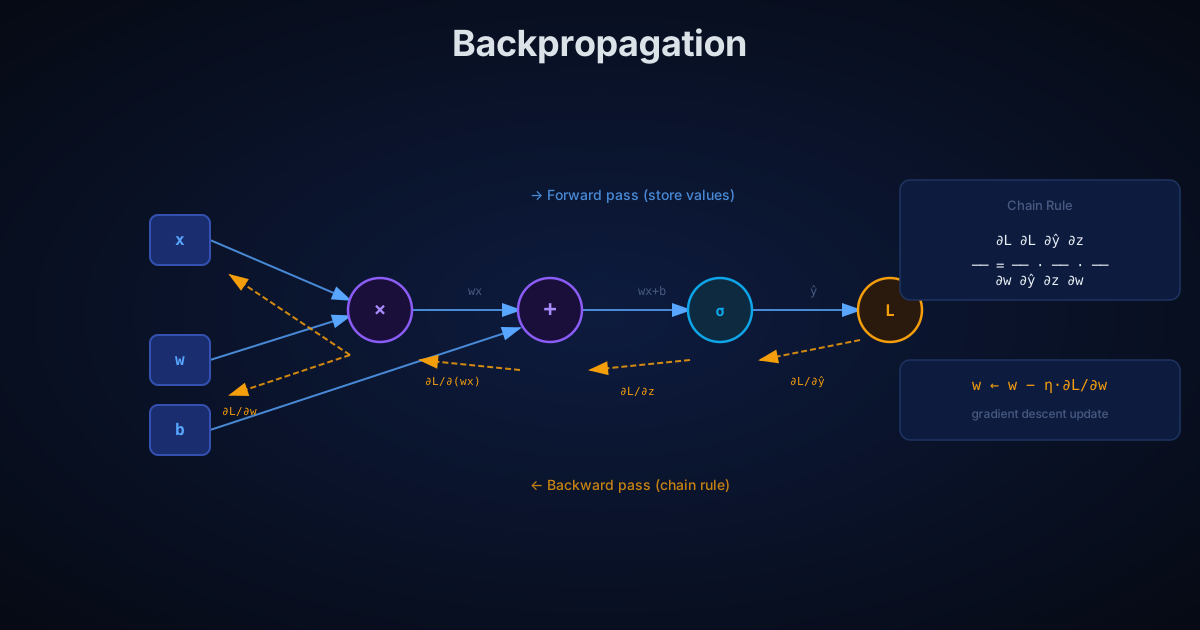
Backpropagation: How Neural Networks Learn from Mistakes
A complete walkthrough of backpropagation — the chain rule applied to computation graphs. Includes a worked numerical example through a 2-layer network.
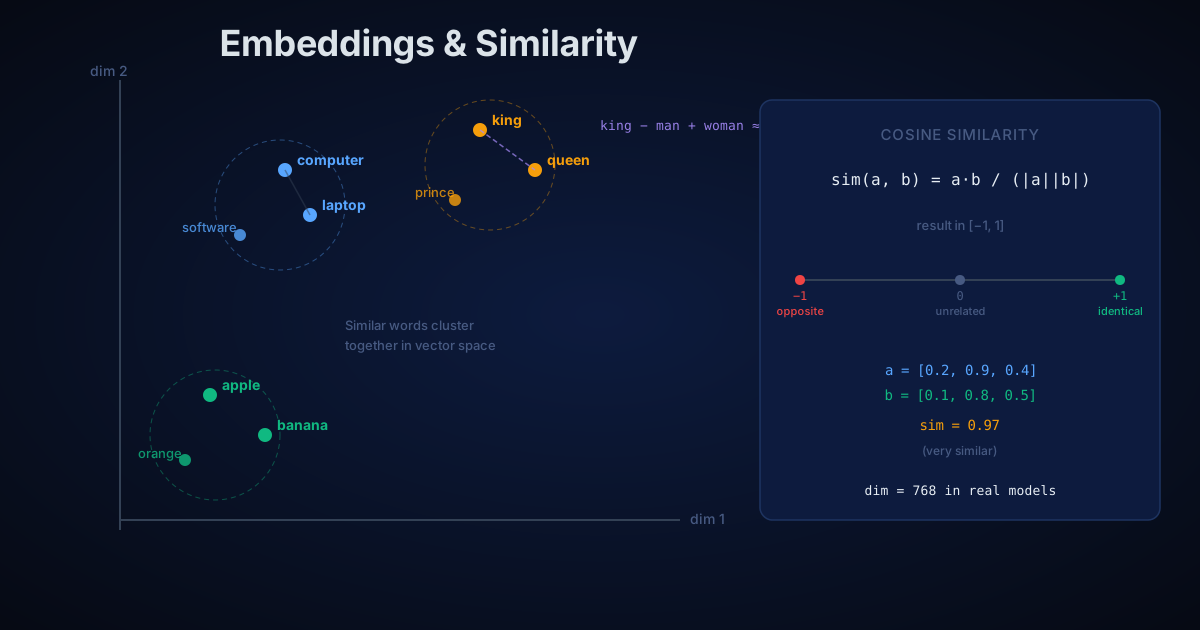
Embeddings and Similarity: Turning Words into Vectors
How neural networks represent words as dense vectors, why dot products measure similarity, and how cosine similarity finds related concepts.
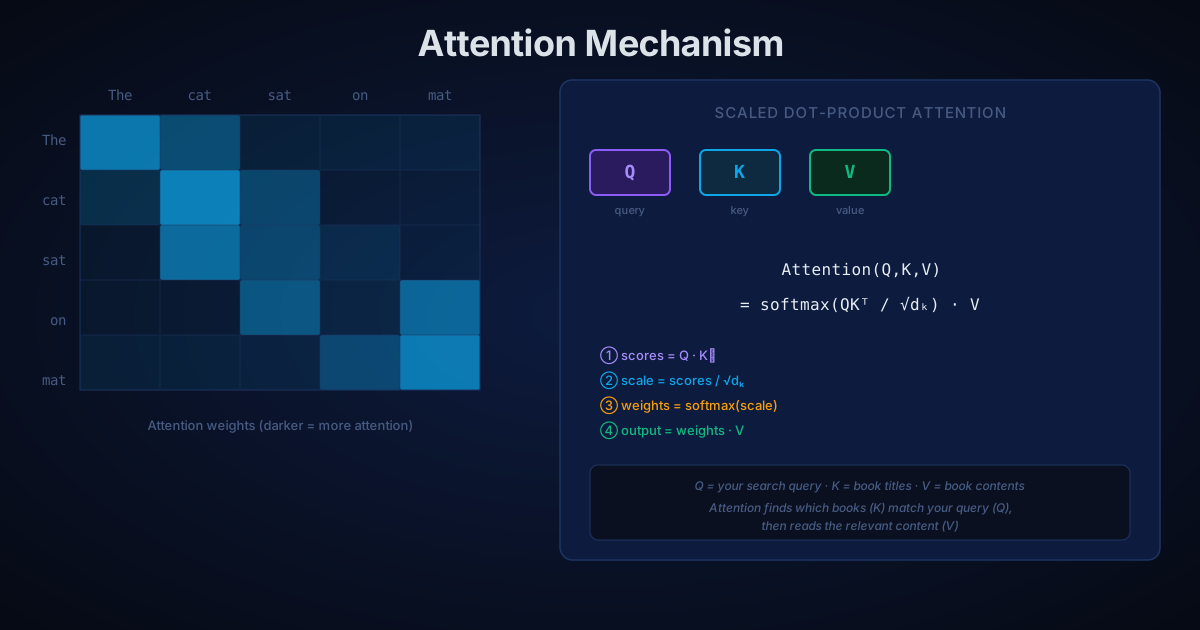
The Attention Mechanism: How Transformers Focus
A detailed walkthrough of scaled dot-product attention — Query, Key, and Value matrices, the softmax operation, and a complete numerical example.
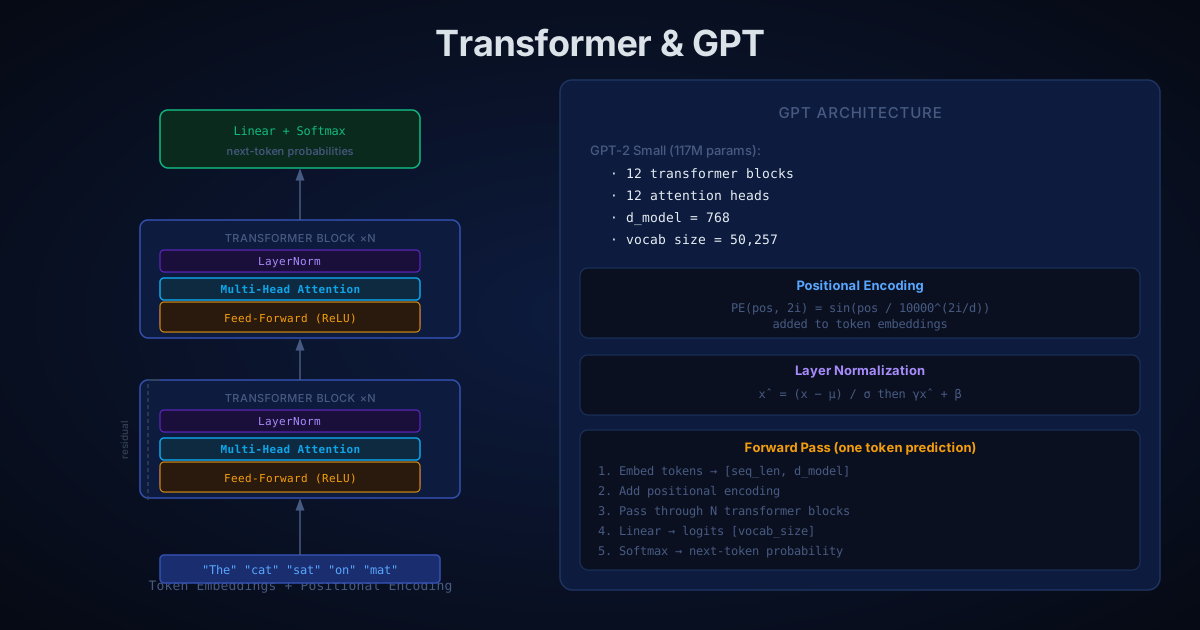
The Transformer and GPT: Putting It All Together
Multi-head attention, positional encoding, layer normalisation, and the feed-forward sublayer. A complete step-by-step forward pass through GPT.
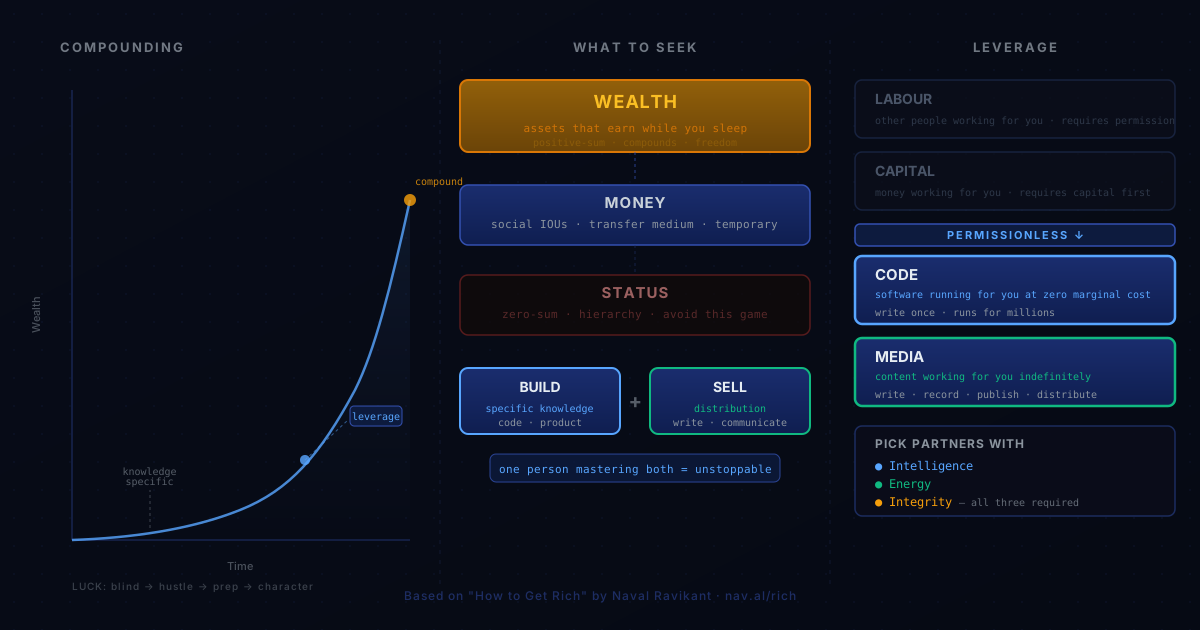
People, Character, and the Foundation of Learning
Who to build with, why long-term games compound everything, and how to build the reading habit that underpins Naval Ravikant's entire framework.
Leverage, Scale, and What the Internet Changed
Specific knowledge is the what. Leverage is the how. The four types, why code and media are permissionless, and what the internet permanently changed.
Specific Knowledge Is Your Moat
The skills that make you irreplaceable cannot be taught in classrooms. Naval on specific knowledge, skill stacking, and why build plus sell beats either alone.
The Luck You Can Engineer
Naval Ravikant identifies four types of luck — most of the ones that matter for wealth are ones you can systematically engineer.
Wealth, Money, and Status: Getting the Definitions Right
Wealth, money, and status are three different things most people conflate. Naval Ravikant explains why the distinction changes everything.

B-Trees and B+ Trees: From Binary Trees to Database Indexes
If you know binary search trees, you are halfway to understanding how databases find your data. B-trees are BSTs that got wide on purpose — here is why.
PostgreSQL Indexing: Internals, Types, and Trade-offs
A practical guide to PostgreSQL indexes: B-tree, GIN, GiST, BRIN, hash — when to use each, composite key ordering, and CONCURRENTLY pitfalls.
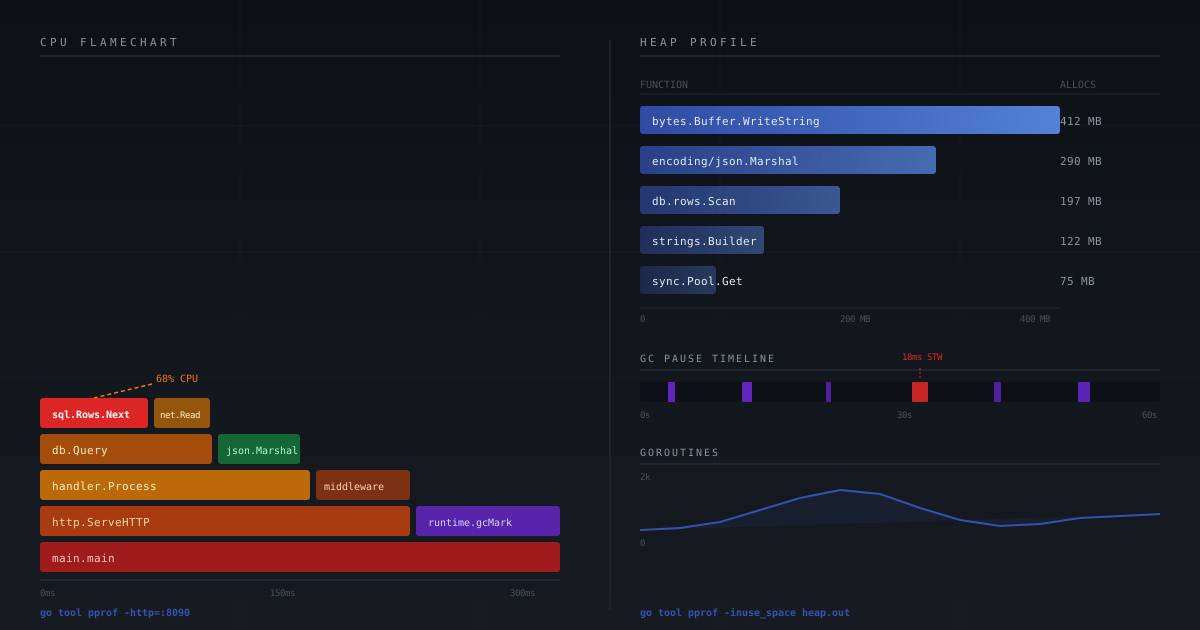
Go Profiling: From pprof to Flame Graphs
A practical guide to CPU, heap, goroutine, and trace profiling in Go — when to use each tool, how to wire it into a service, and how to read the output.
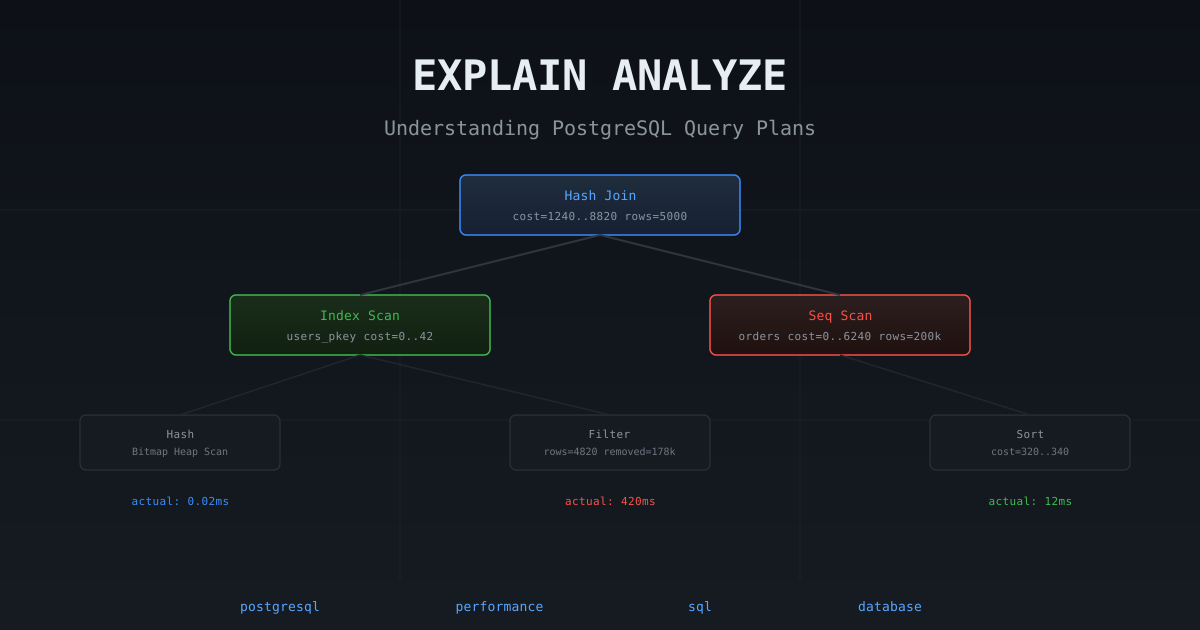
PostgreSQL EXPLAIN: Reading and Understanding Query Plans
How to read PostgreSQL EXPLAIN output: scan types, join algorithms, and the cost model — turn opaque query plans into actionable insights.
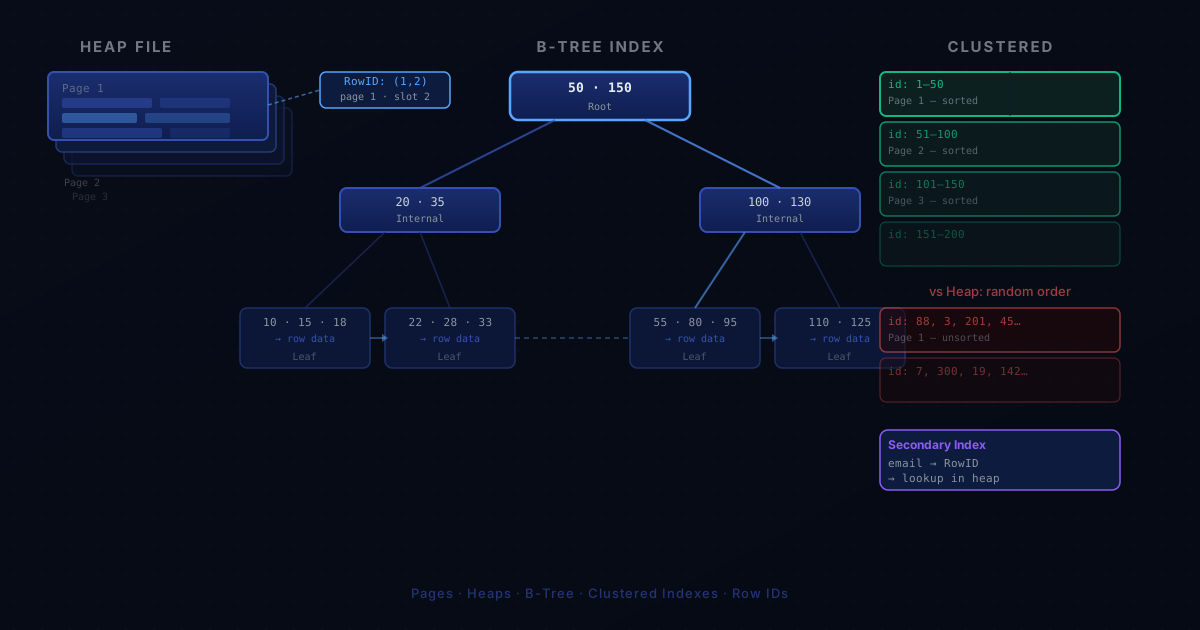
How Databases Actually Store and Find Your Data
A bottom-up look at how databases physically store data — pages, heaps, B-trees, clustered indexes, and row IDs.
ACID, Read Phenomena, and Isolation Levels: What to Use When
A practical guide to database transactions — ACID, five concurrency anomalies, isolation levels, MVCC vs locks, and choosing the right level.
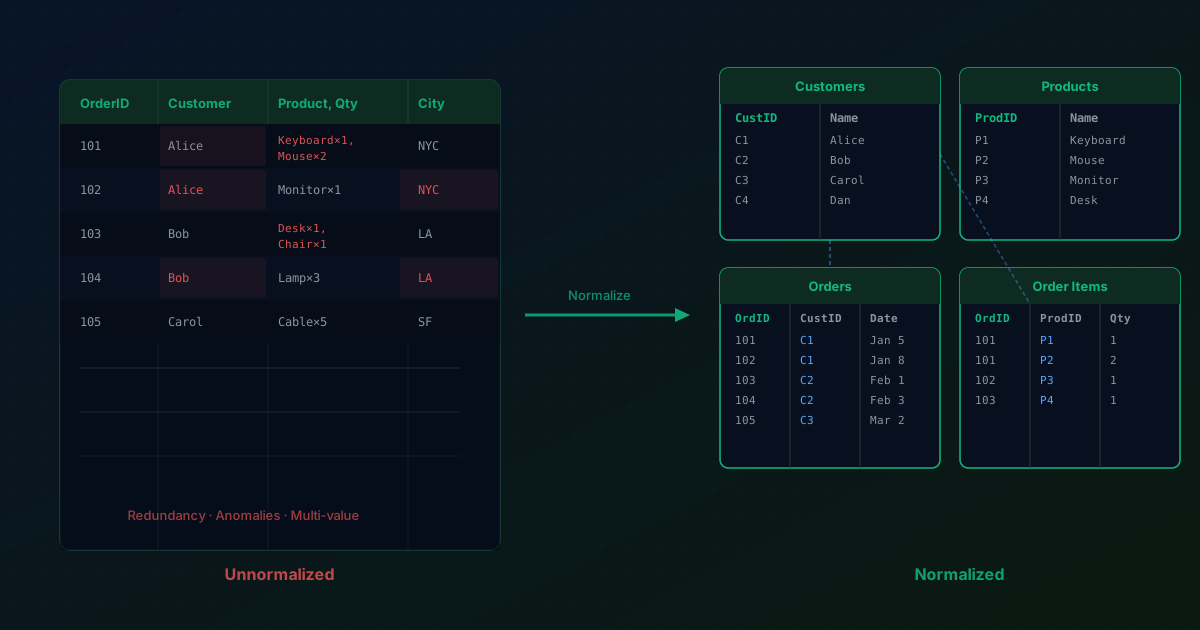
Database Normalization: 1NF through 5NF Explained
A practical guide to database normalization — 1NF through 5NF, when to denormalize, and the pitfalls teams hit. With concrete data examples.